

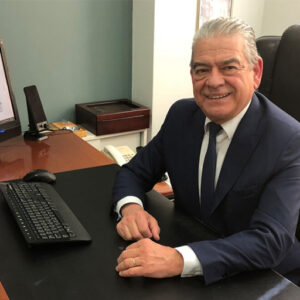
S.Kassidiaris: We aim to innovation, outward-looking, new technologies
Despite the crisis of the Covid-19 pandemic, the company C&A Stavros Kassidiaris S.A. launches new partnership opportunities, innovative products, flexible services and new facilities. As Stavros Kassidiaris, the President of C&A Stavros Kassidiaris S.A., explains in his interview at Elnavi Magazine – October 2020 Issue: “The company manages in 2020 to implement every plan it launched for further development of its commercial and technical department”.
– What are the consequences of the Covid-19 pandemic on your shipbuilding activities?
It is a fact that the coronavirus was added to the list of the updates that have significantly affected the shipbuilding industry, along with the devaluation of the shipbuilding and repair zone of Perama and the closed shipyards. The main problem we were faced from the beginning of the pandemic is the relocation of our technicians to ships abroad, as well as the fact that many shipyards and shipping equipment companies have been closed for some time or continue to be under-operated. Simultaneously, the needs that arose in the ships accumulated due to the above had as a result the required service of many ships in a short period of time. This, for our company, was a challenge that we faced with timely and effective management which greatly made us achieve the satisfaction of our customers.
– Describe the comparative advantages and strengths of the shipbuilding sector in Greece?
The strategic geographical position of Greece next to the main arteries of maritime trade, but also the fact that it is the first European country to meet the ships passing through the Suez Canal can only be an important ace up the sleeve of Greek shipbuilding. The strengths of the domestic shipbuilding industry also include adequate infrastructure, high technology and know-how and a skilled workforce. At the same time, the shipbuilding sector in Greece has the largest customer in the world, which is none other than the Greek-owned fleet. I should also add that in recent years we have seen a continuous upward trend for the port of Piraeus, in the international ranking of the main shipping centers, as well as its increasing transport work. This is definitely an important advantage that should be taken advantage of by those involved in shipbuilding repair.
– Describe the CSR (corporate social responsibility) and environmental awareness activities of C&A group?
The philosophy of the C&A group is the pursuit of improving our financial position to go hand in hand with the well-being and dignity of employees, as well as with the protection of the environment. For our employees we have created a pleasant working environment, equal and with flexible working hours, where individual development and initiative are encouraged. Our goal is to provide opportunities for continuous improvement with seminars, workshops and safe work training to all staff. For this purpose, we participate in working groups with EKAB, while recently we proceeded to the purchase and installation of a defibrillator in our facilities. In addition, in recent years we have created a corporate canteen, which prepares free snacks and drinks for everyone. For our technicians traveling abroad we have taken care of and offer extra private insurance from a large international insurance organization. Moreover part of the company’s revenue is allocated to the purchase of modern equipment that optimizes working conditions and creates new jobs. In terms of external social responsibility, the company operates with respect to the environment and makes every effort not to burden it. It enhances the process of recycling paper, electrical appliances, batteries, packaging, etc., while promoting their frequent removal from the site by sending them to the competent management bodies. Also, our company supports in various ways the needs of schools in the area of Piraeus and sports teams, while it also participates in blood donation teams. SELECTRON S.A., a member of the C&A group, also decided to sponsor I.R. for the preventive protection from COVID-19 in various state services with the first delivery of 50 packages to the Navy. Finally, our company has been certified with ISO 9001: 2015 (Quality Management System), ISO 14001: 2015 (Environmental Management Systems), OHSAS 18001: 2007 (Occupational Health & Safety Management System).
– Have you collaborated with other organizations to enhance the competitiveness of the industry you represent?
From time to time, synergy efforts have been made with Academic Institutions and other companies in the industry, which would probably enhance the competitiveness of the industry and increase the level of services and products provided. However, such step in order to be successfully completed requires a specific timeline and long-term plan, team spirit, common goals, vision and certainly some institutional body to coordinate and succeed the project. Recently, on the occasion of the expected armament programs of the National Armed Forces, our company is in contact with large construction companies abroad for cooperation and maximization of the compensatory benefits for the Greek economy. We are also in close cooperation with GEETHA for the drafting of technical specifications of equipment and systems. Here I must congratulate the work of the GDAEE (General Directorate of Defense Equipment) of the Ministry of National Defense as well as the SEKPY (Association of Defense Material Manufacturers) that seeks to strengthen the domestic Defense Industry. Finally, I would like to note that our company is a registered manufacturer of defense equipment with code N-CAGE: G2426 and a registered NATO contractor with code code CONFIDENTIAL FORMATION No. 4998.
– What are the problems and challenges you face? Will the reopening of the Elefsina and Skaramaga shipyards benefit the shipbuilding industry?
The reopening of the historic Skaramaga and Elefsina shipyards will be a positive development for the industry. It comes to remind in practice the high know-how of the human resources of the Greek shipbuilding and repair zone, opens their turnover with projects related to ships, beyond the Navy, dynamically returns Greece to the forefront as a center of shipbuilding and maintenance, setting aside its recent Turkey, which after the closure of the two Greek shipyards was the only economic choice in the region. The cost of Greek services in the industry may be more expensive, compared to the neighboring country, but the highest quality services and the highest quality products in Greece are undeniable, which gives us an advantage in value for money and makes us the first choice in the Mediterranean. Therefore, the positive development that is expected in shipping companies like ours is easy to understand.
– What are the prospects for the production of maritime equipment in Greece, given the conditions of international protectionism and high taxation? What are your future plans?
The production of maritime equipment in Greece, which also includes installation and maintenance services on ships, demands a high level of expertise, technology, and experience. This inherently requires recognition and the ability to adapt to competitive international pricing.
Despite the strengths of Greek companies in manufacturing electromechanical equipment, several challenges remain. Strong protectionist policies in Asian countries—which heavily subsidize shipbuilding—combined with the limited availability of low-interest financing for Greek businesses, make it difficult to penetrate these maritime markets. These are two major obstacles we need to overcome.
Additionally, our businesses face significant hurdles due to high taxes, steep social security contributions, and the bureaucratic red tape we encounter at every turn. That said, our group of companies has already supplied several dozen automation systems for newbuildings, thanks largely to the trust our clients place in us.
In my view, to become more competitive and to make a stronger push into key maritime markets like Asia, we must smartly leverage Greece’s long-standing tradition in international shipping. We should also establish hubs of companies that specialize in maritime equipment production, place greater emphasis on specialized knowledge, new technologies, and innovation, and focus on expanding our global reach. Only by doing so can Greek maritime equipment production achieve sustained growth under the current conditions.
In implementing our plans, we naturally couldn’t ignore the challenges we’re all facing due to the COVID-19 pandemic. I’ve always believed that, just as in every crisis, new opportunities for growth can emerge—whether through innovative products, more modern and flexible services, or new facilities equipped to support production and support operations.
I’m therefore pleased to announce that, throughout 2020, our company successfully set sail and continued to carry out every plan we had initiated. We’ve established new partnerships with international maritime equipment manufacturers, expanded our customer base by entering markets and countries we previously hadn’t reached, and increased our presence in digital shipping.
We now offer our customers the ability to quickly and easily obtain the materials they need through our e-shop (shop.kassidiaris.gr), we’re strengthening our Research & Development department for new products, and we’ve recently purchased land for the construction of new facilities for our group. These facilities will support the further development of our commercial and technical divisions and create new jobs in the near future.